

Introduction
A business owner recently shared a concern that, at first glance, seemed confusing but is actually very common.
Their website was receiving a steady flow of visitors every month. Traffic reports looked promising, engagement numbers were not terrible, and there was clear evidence that people were finding the business online.
However, when it came to actual enquiries—calls, form submissions, or serious client conversations—the results were inconsistent and often disappointing.
This gap between traffic and enquiries creates frustration because it challenges a common assumption:
If people are visiting the website, they should eventually convert.
But in reality, that is rarely the case.
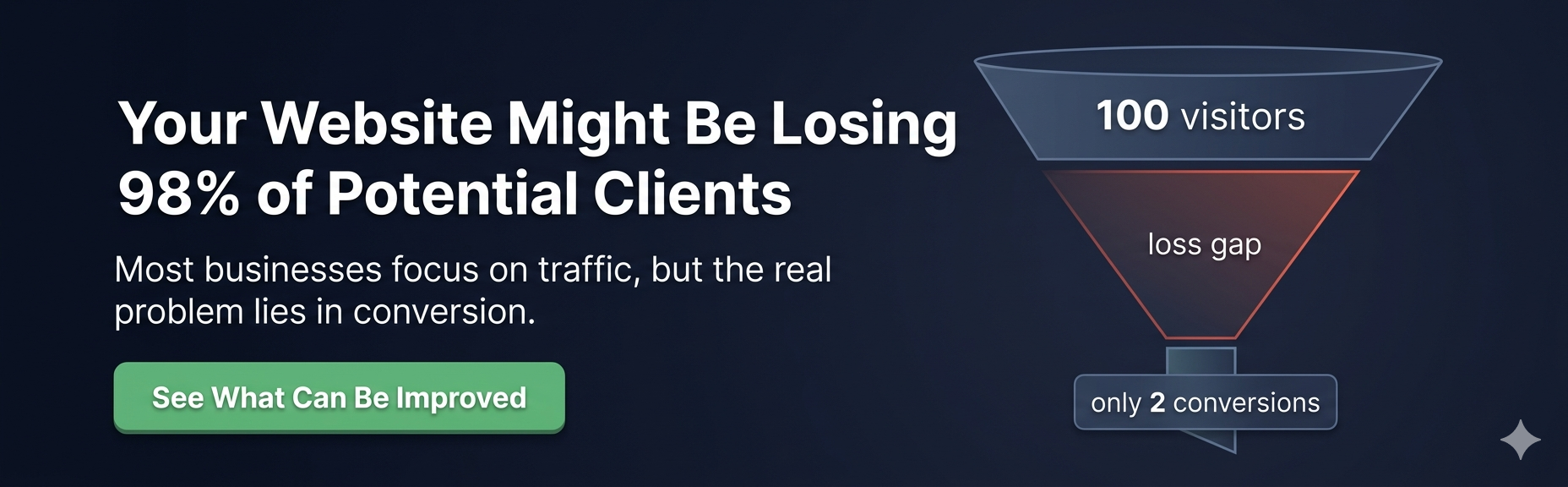
Across most service-based businesses, a large percentage of website visitors—often close to 95–98%—leave without taking any action. They browse briefly, scan a few sections, and exit without making contact.
This is what we can call the hidden 98%.
These are not random users. Many of them are potential clients who simply did not find enough clarity, trust, or direction to move forward.
Understanding why this happens is essential, because until this gap is addressed, increasing traffic alone will not improve results. It will only increase the number of missed opportunities.
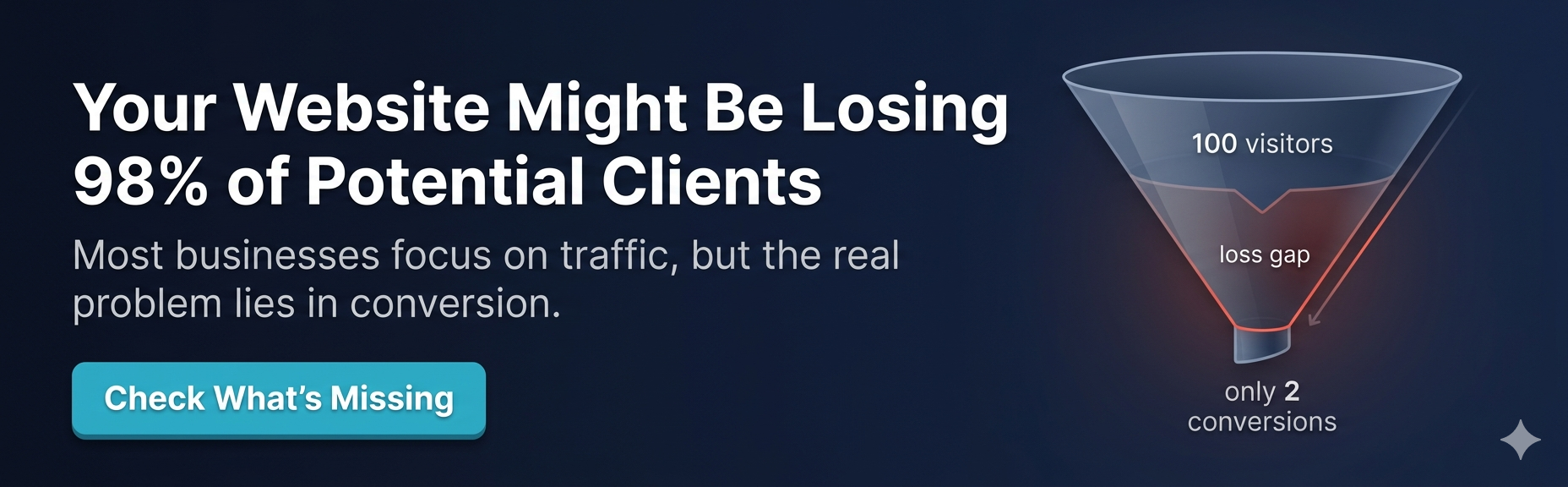
Table of Contents
- Understanding the Hidden 98% of Website Visitors
- Why Traffic Alone Rarely Converts into Leads
- The Real Reasons Visitors Leave Without Taking Action
- How User Behavior Impacts Website Conversion
- Where Most Websites Fail in the Decision Journey
- Real-World Scenario: Traffic Without Enquiries
- What Actually Turns Visitors into Leads
- Building a Conversion-Focused Website System
- Final Thoughts: From Passive Traffic to Active Enquiries
- Frequently Asked Questions
Understanding the Hidden 98% of Website Visitors
When businesses look at website analytics, they often focus on metrics such as traffic volume, page views, or session duration. While these numbers are useful, they do not tell the full story.
What matters more is what visitors actually do.
In many cases, out of every 100 visitors:
- Only a small percentage explore multiple pages
- Even fewer interact with content
- A very small number take meaningful action
The rest simply leave.
This is not always due to lack of interest. In fact, many of these visitors arrive with intent—they are researching, comparing, or considering options.
However, something in the experience causes them to disengage.
That is where the concept of a website not converting becomes relevant. The issue is not visibility, but effectiveness.
Why Traffic Alone Rarely Converts into Leads
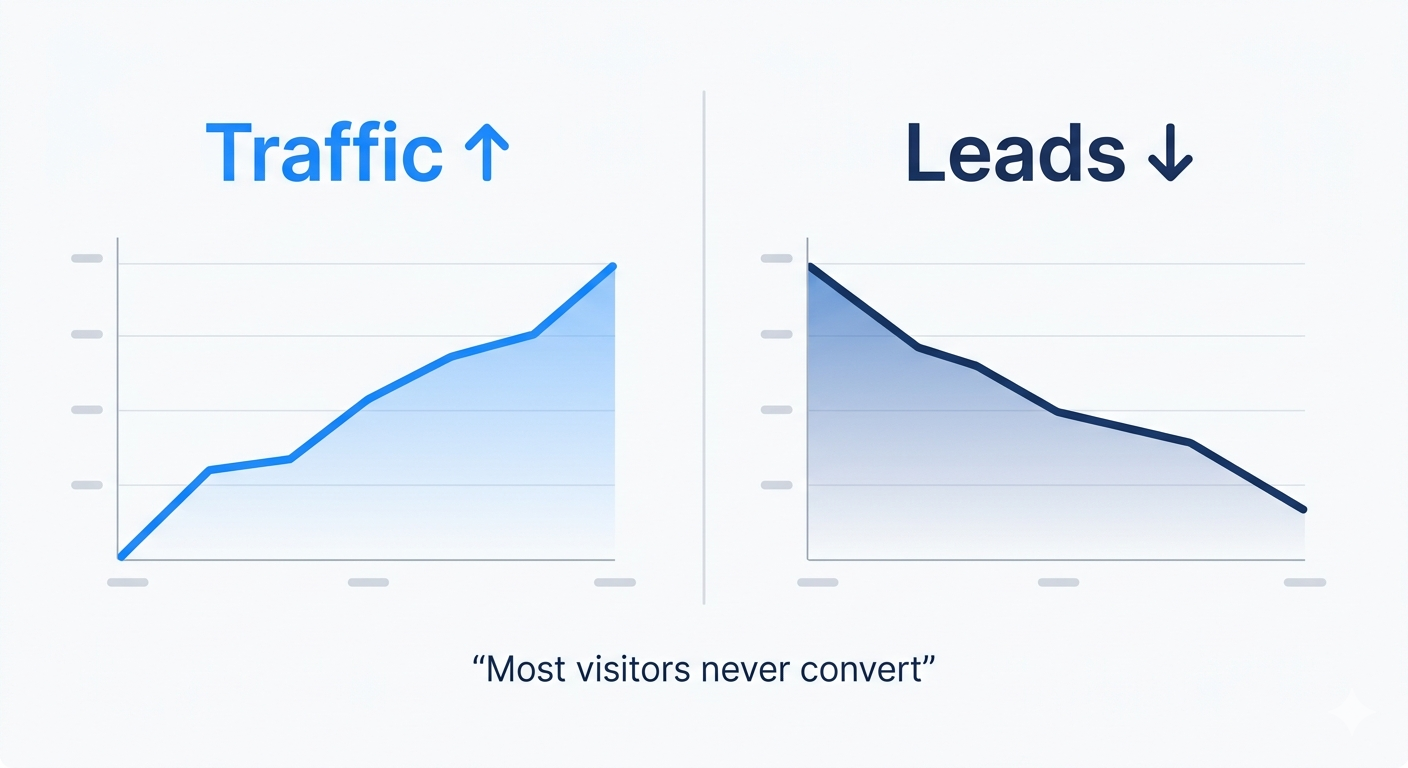
It is common for businesses to assume that increasing traffic will automatically increase enquiries. This belief often leads to more investment in ads, SEO, or social media promotion.
While traffic is important, it is only the first step in the process.
A website functions as the middle layer between visibility and conversion. If this layer is weak, even high-quality traffic will not produce consistent results.
Think of it this way:
- Traffic brings people in
- Structure guides them
- Trust convinces them
- Clarity moves them to act
If any of these elements are missing, the process breaks.
This is why many businesses struggle with website leads despite having a reasonable number of visitors.
Many businesses underestimate the importance of improving website conversion rate, which is often the real reason behind low enquiries despite decent traffic.
The Real Reasons Visitors Leave Without Taking Action
When we analyze non-converting websites, certain patterns appear consistently.
1. Lack of Immediate Clarity
Visitors make quick decisions. Within a few seconds, they try to understand:
- What this business does
- Whether it is relevant to them
- What outcome they can expect
If this information is not immediately clear, they leave.
2. No Structured User Journey
Many websites are built as collections of pages rather than guided experiences.
There is no defined flow such as:
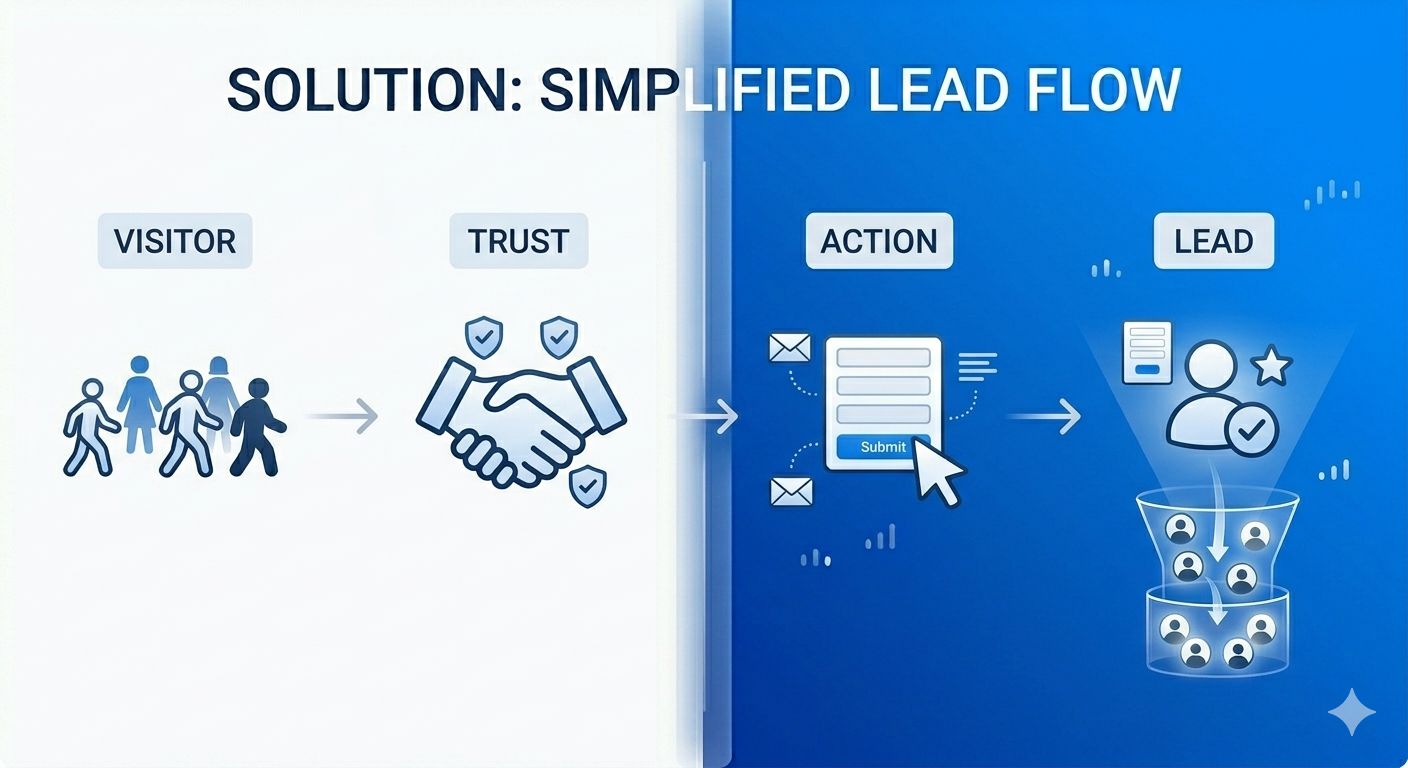
Introduction → Problem → Solution → Trust → Action
Without this, users have to navigate on their own, which increases drop-off.
3. Weak or Generic Messaging
Statements that sound impressive but lack specificity do not create confidence.
Visitors are looking for clarity, not complexity.
4. Insufficient Trust Signals
Before taking action, users want reassurance.
This includes:
- Testimonials
- Case results
- Process clarity
- Social proof
Without these elements, hesitation increases.
5. Ineffective Call-to-Action Strategy
A call-to-action should feel like the natural next step. However, many websites either hide it, overuse it, or present it in a way that does not align with user intent.
How User Behavior Impacts Website Conversion
Understanding user behavior is critical to improving conversion.
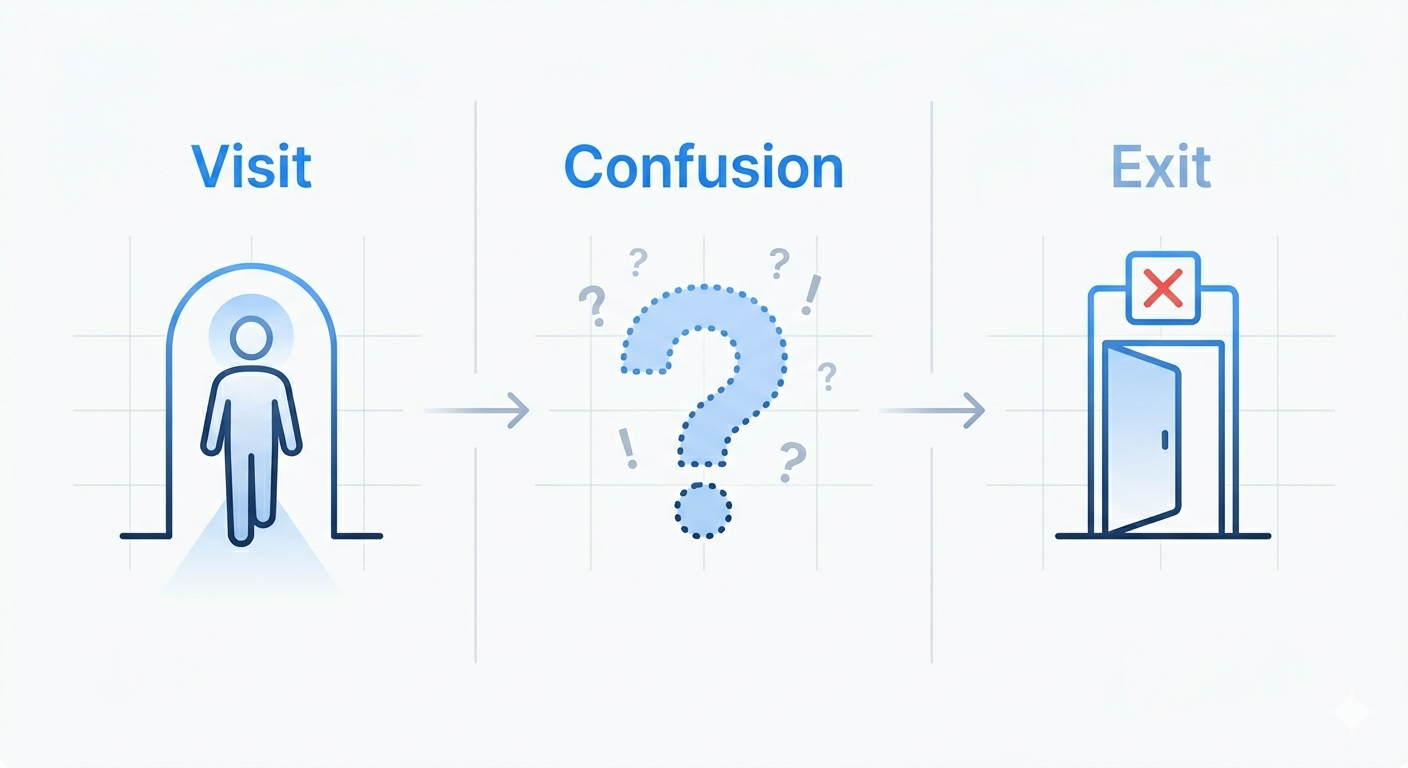
Visitors do not read websites in a linear manner. They scan, jump between sections, and make quick judgments based on visual hierarchy and content clarity.
They are not trying to understand everything. They are trying to decide quickly.
This means your website must:
- Communicate clearly without requiring effort
- Build trust without forcing users to search for it
- Present a clear next step at the right moment
A visually appealing site without these elements may still struggle as a lead generation website.
Where Most Websites Fail in the Decision Journey
Most websites break down at specific points in the user journey.
- Entry Stage: Confusing or unclear messaging
- Consideration Stage: Lack of structured information
- Trust Stage: Missing proof or credibility
- Action Stage: Weak or unclear CTA
Each of these gaps contributes to lost opportunities.
Without a clear structure, even well-designed websites struggle when it comes to improving website conversion rate, especially during the critical decision-making stage.
Real-World Scenario: Traffic Without Enquiries
Consider a service-based business offering home improvement services.
The website was receiving consistent traffic from search engines, and the business owner assumed that growth would naturally follow.
However, enquiries remained low.
A closer evaluation revealed:
- The homepage did not clearly communicate the value proposition
- Service pages were generic and lacked detail
- There were no strong testimonials or case examples
- The enquiry process was not clearly defined
After making targeted improvements:
- Messaging was rewritten for clarity
- Services were structured around outcomes
- Trust elements were added
- The enquiry process was simplified
The result was a noticeable increase in enquiries, even though traffic levels remained relatively stable.
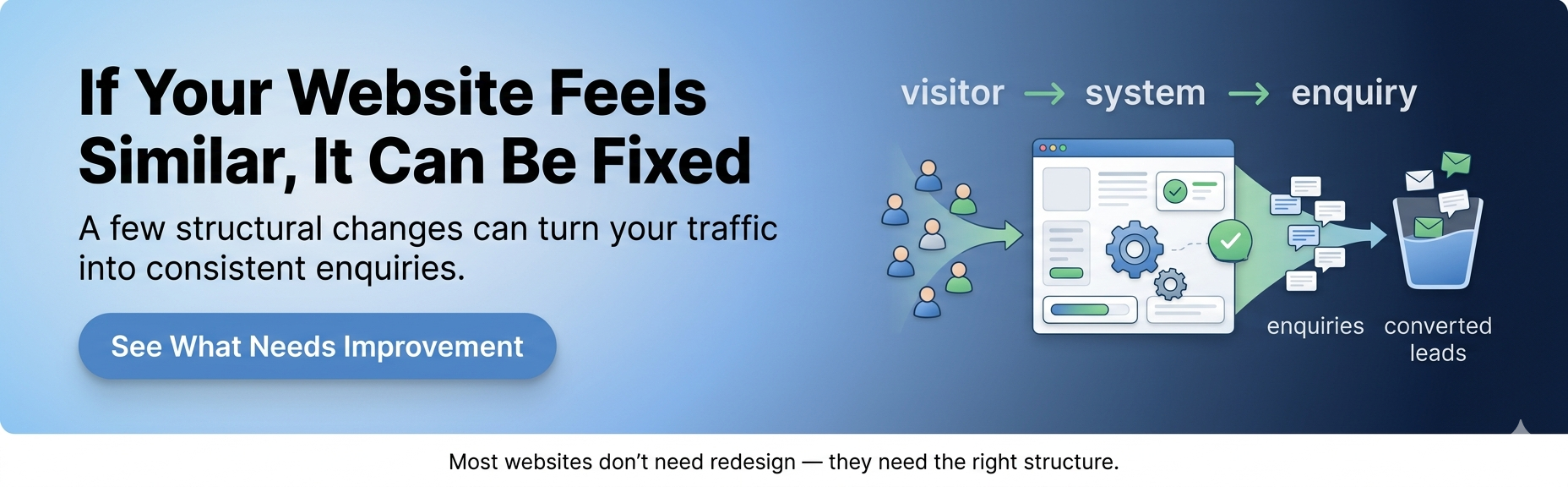
A strategic approach to website development for lead generation focuses on creating a structured journey rather than just a visually appealing design.
What Actually Turns Visitors into Leads
Turning visitors into leads requires more than design improvements. It requires alignment between user expectations and website experience.
Key elements include:
Clear Positioning
Visitors should immediately understand what you offer and who it is for.
Structured Flow
A logical progression from introduction to action reduces friction.
Trust and Credibility
Visible proof reduces uncertainty.
Strategic CTA Placement
Calls-to-action should appear at decision points, not randomly.
Conversion-Focused Approach
This is where improving website conversion rate becomes more valuable than simply redesigning pages.
Lead Capture and Follow-Up
Understanding how to get leads from your website involves creating systems beyond the page itself.
Building a Conversion-Focused Website System
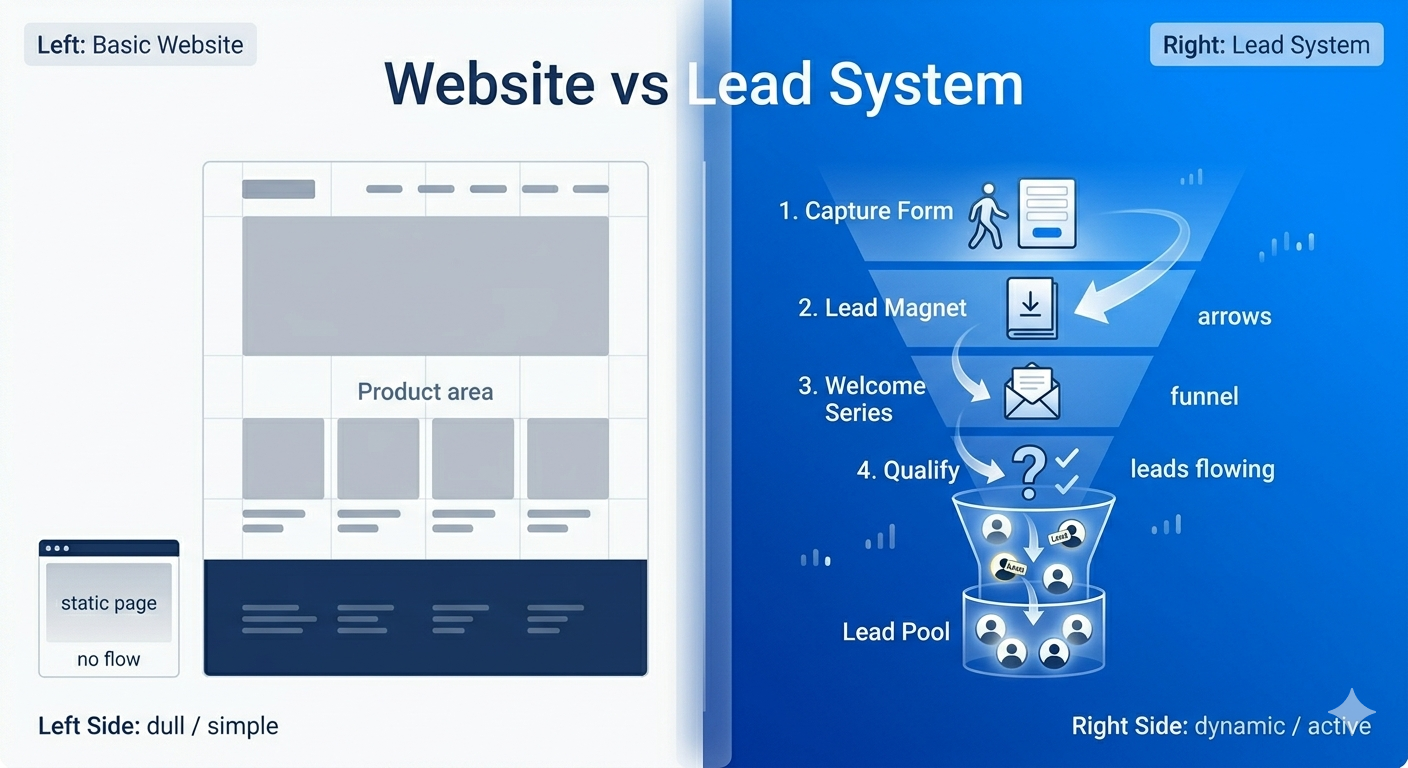
A website alone is not enough.
What drives consistent results is a system that includes:
- Messaging strategy
- User flow design
- Trust-building elements
- Lead capture mechanisms
- Follow-up processes
This is what transforms a basic website into a performance-driven platform.
For businesses looking to expand further, integrating solutions like mobile app development for business growth can enhance user engagement and retention.
From Passive Traffic to Active Enquiries
The gap between website traffic and enquiries is not accidental. It is the result of missing structure, unclear messaging, and lack of strategic alignment.
By focusing on how visitors experience your website—not just how it looks—businesses can start converting more of that hidden 98% into meaningful opportunities.
The goal is not just to attract visitors, but to guide them toward action with clarity and confidence.
Frequently Asked Questions (FAQs)
Why do most website visitors not convert?
Because they do not find enough clarity, trust, or direction to take action.
Is this a traffic issue or a website issue?
In many cases, it is a website structure issue rather than a traffic problem.
Can conversion improve without increasing traffic?
Yes. Improving structure and messaging often leads to better results even with the same traffic.
What is the first thing to fix on a website?
Clarity of messaging and user flow.
How long does it take to see improvements?
It depends on the changes made, but noticeable improvements can often be seen within weeks.
What’s your decision
If your website is attracting visitors but not generating consistent enquiries, it may be worth taking a closer look at how effectively it is guiding users toward action.
A structured evaluation can help identify specific gaps in messaging, user flow, and conversion strategy, allowing you to make informed improvements that align your website with your business goals.