
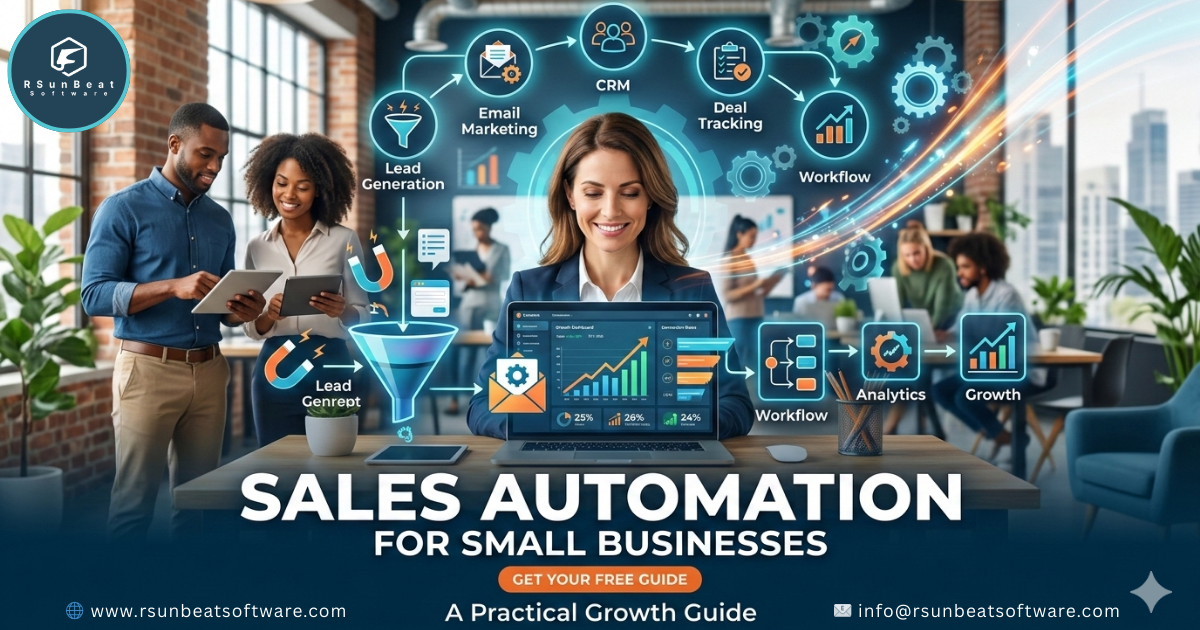
Many small businesses reach a stage where the marketing is working, the website traffic is coming in, inquiries appear in the inbox, and yet something strange happens inside the company — sales feel inconsistent, follow-ups are slow, opportunities disappear, and the team constantly feels busy but revenue growth does not match the effort.
I’ve seen this pattern across startups, service companies, SaaS founders, and growing B2B teams. The issue is rarely a lack of leads. In most cases, the real problem sits deeper inside the business system itself.
Leads arrive.
But they are not managed properly.
Follow-ups happen.
But they happen too late.
Sales teams work hard.
But much of their time disappears into repetitive tasks instead of conversations that actually close deals.
This is exactly where sales automation for small business becomes a turning point. Not as a fancy technology trend, but as a structured system that helps companies manage leads, track opportunities, and build predictable revenue pipelines.
What Is Sales Automation for Small Businesses?
Understanding the Basics of CRM Automation, Sales Workflows & Lead Management
When founders first hear the term sales automation, many imagine complex software or large enterprise systems. In reality, the concept is far simpler and far more practical.
At its core, sales automation for small business means using digital systems to manage repetitive sales activities so that leads move through a structured pipeline instead of relying on manual tracking, scattered spreadsheets, or memory.
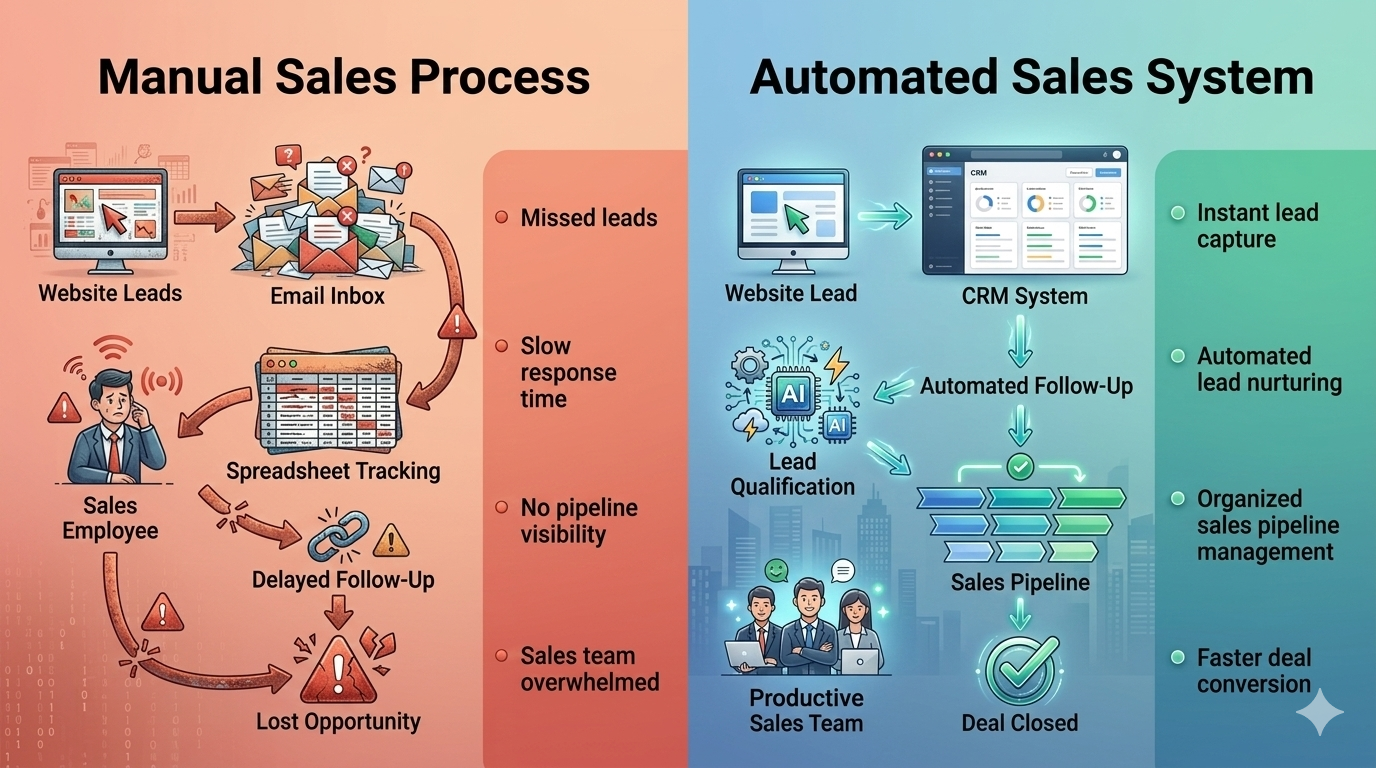
A typical manual sales process often looks like this:
• Leads arrive through website forms or emails
• Someone manually records them in a spreadsheet
• Follow-ups depend on whether someone remembers
• Conversations happen across different platforms
• Deals are tracked informally
This creates chaos over time.
A properly structured system replaces this with CRM automation and automated sales workflows, where the business begins to operate through a clear structure:
• Leads automatically enter a CRM system
• Sales pipeline stages track every opportunity
• Automated follow-up systems maintain communication
• Sales teams focus on conversations instead of administration
For small teams especially, this structure becomes incredibly powerful.
Large enterprises solve these problems by hiring bigger teams.
Small businesses solve them by building smarter systems.
Why Many Small Businesses Struggle With Sales Consistency
The Real Sales Problems Founders Face
When I speak with founders and business owners, the same pattern appears again and again. Marketing might be producing leads, but sales performance still feels unpredictable.
The reason usually comes down to operational gaps inside the sales pipeline management process.
These problems rarely appear dramatic on the surface, but they quietly erode conversion rates over time.
Common realities inside small businesses include:
• Leads slipping through the cracks because there is no structured system tracking every opportunity.
• Slow follow-ups where prospects wait hours or even days for a response, dramatically lowering the chances of conversion.
• Sales teams spending hours on repetitive tasks such as sending emails, scheduling meetings, updating spreadsheets, and tracking conversations.
• Lack of visibility into the sales pipeline, leaving founders unsure about how many deals are actually progressing toward revenue.
Without systems like lead follow-up automation and proper sales productivity tools, the business becomes dependent on individual effort rather than structured workflows.
And when growth depends only on effort, it rarely scales.
Key Benefits of Sales Automation for Small Business Growth
How Automation Improves Revenue, Conversions & Efficiency
Once a business begins implementing structured sales productivity automation, the impact often becomes visible surprisingly quickly.
Not because automation magically creates customers, but because it eliminates friction from the sales process itself.
Several benefits tend to emerge when automated lead nurturing and structured workflows enter the system.
Faster response times to new leads
In many industries, the first company to respond often wins the conversation. Automation ensures prospects receive an immediate response, even before a sales rep personally engages.
Clear sales pipeline tracking
Instead of guessing which deals might close, founders gain visibility into every stage of the pipeline — from initial inquiry to negotiation and final conversion.
Higher conversion rates through automated lead nurturing
Many prospects are not ready to buy immediately. Structured automated lead nurturing keeps communication active without overwhelming the sales team.
Reduced workload for small teams
Salespeople should spend their time building relationships and closing deals, not performing repetitive administrative tasks.
Automation creates space for exactly that.
Essential Sales Automation Tools Every Small Business Needs
CRM Systems, Email Automation & Lead Management Software
Sales automation does not rely on a single platform. Instead, it usually involves a group of interconnected tools that together create a structured sales ecosystem.
The most common categories include:
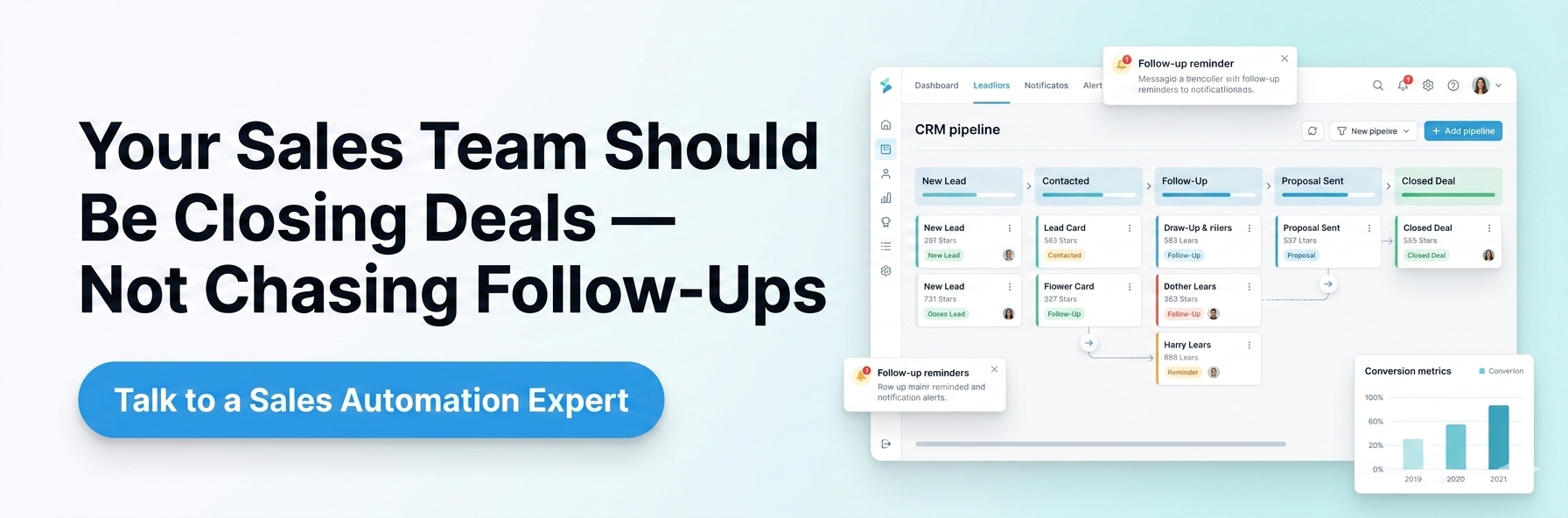
CRM platforms
A CRM becomes the central system where leads, deals, conversations, and pipeline stages are tracked. When businesses search for the best CRM for small business, they are essentially looking for the system that organizes their entire sales operation.
Email automation tools
Prospects rarely convert after a single message. Email automation tools allow businesses to nurture relationships through structured communication sequences.
Meeting scheduling automation
Scheduling can become surprisingly time-consuming. Automated scheduling tools remove back-and-forth emails and allow prospects to book meetings instantly.
Lead scoring and qualification systems
Not every lead carries the same value. Modern sales automation tools help businesses prioritize high-quality opportunities and focus attention where it matters most.
Together, these tools form the backbone of a scalable lead management software ecosystem.
How to Build an Automated Sales Funnel
Lead Capture → Lead Nurturing → Conversion System
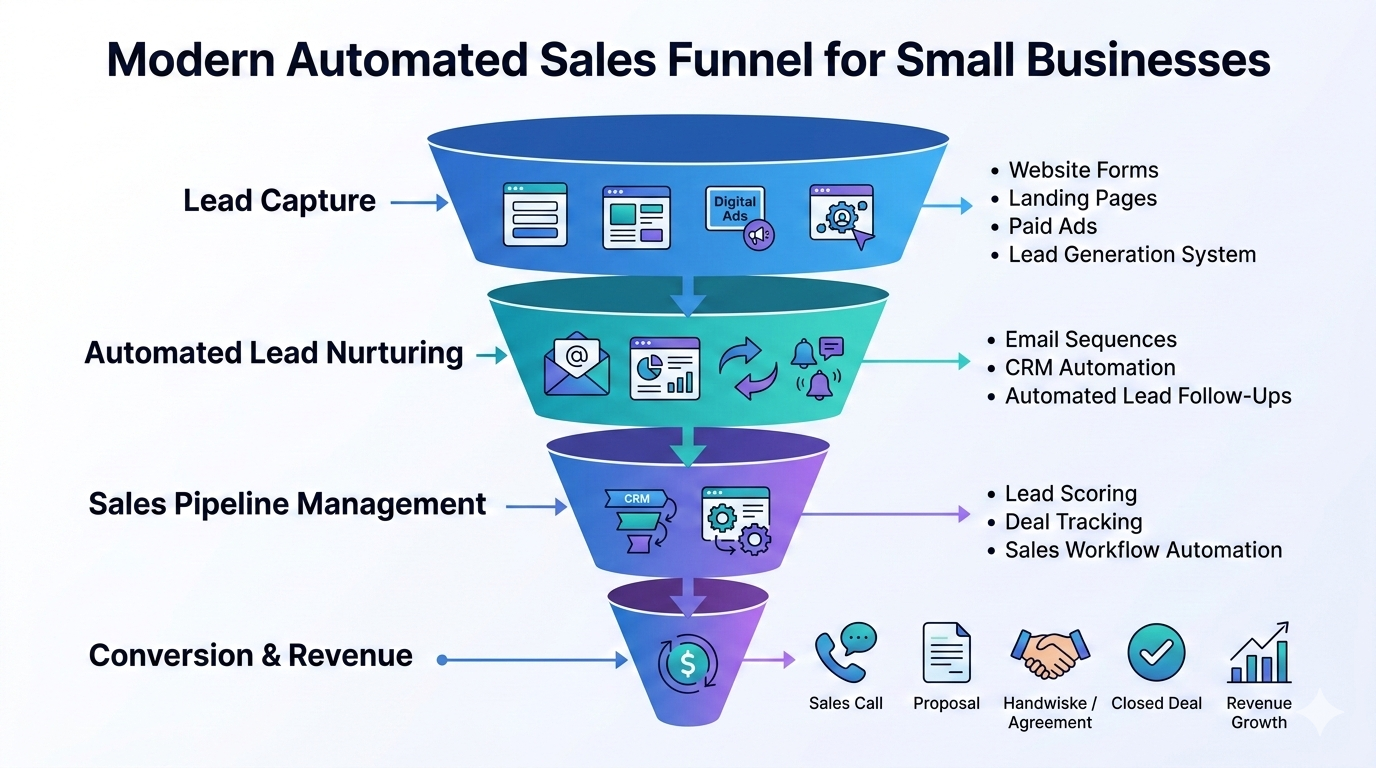
Every effective automated sales funnel follows a similar conceptual structure, even though the technical implementation may vary between companies.
The funnel begins with lead capture.
Visitors arrive through marketing campaigns, search traffic, or referrals. At this stage, websites and landing pages act as the entry point into the company’s lead generation system.
Once captured, leads enter the nurturing phase.
This stage often involves sales funnel automation, where prospects receive educational content, follow-up emails, or consultation invitations designed to move them toward a buying decision.
At the same time, the system prioritizes opportunities through lead qualification and pipeline tracking.
Finally, the funnel reaches the conversion stage, where sales conversations, proposals, and negotiations take place.
The structure itself is straightforward.
The challenge lies in designing the workflows, integrations, and automation logic that make the funnel operate smoothly — which is why many growing companies eventually involve experienced automation specialists.
Sales Automation Workflows That Save Time and Increase Revenue
Real Automation Use Cases for Small Businesses
When people discuss automation, the conversation often becomes abstract. But in real businesses, sales workflow automation usually appears in very practical scenarios.
For example:
• Automatic lead assignment, where new inquiries are instantly routed to the appropriate sales representative.
• Automated follow-up systems sending reminders, emails, or SMS messages to keep conversations active.
• CRM deal stage updates, allowing teams to track opportunities without manual data entry.
• Automated reminders for proposals, demos, and meetings, ensuring no opportunity stalls because someone forgot to follow up.
Each of these workflows may seem small individually.
But when combined into a structured CRM workflow automation system, they remove dozens of repetitive tasks from the sales process every single day.
Common Mistakes Businesses Make When Implementing Sales Automation
And Why Many Systems Fail to Deliver ROI
Automation can deliver significant efficiency, but it also fails surprisingly often when businesses approach it incorrectly.
One common mistake is attempting to automate chaos.
If the sales process itself is unclear, automation simply accelerates the confusion.
Other strategic mistakes frequently include:
• Automating before defining the sales process
Without a clear sales journey, automation lacks direction.
• Using too many disconnected tools
Fragmented systems create data silos and operational complexity.
• Ignoring lead quality
Automation cannot compensate for poor targeting or weak lead generation.
• Failing to track performance metrics
Without clear measurement, businesses cannot evaluate the effectiveness of their automation strategy.
Successful automation requires alignment between marketing, sales operations, and system design.
Cost of Sales Automation for Small Businesses
CRM Pricing, Automation Tools & Implementation Cost
One of the most common questions founders ask involves the cost of sales automation.
The answer varies widely depending on the complexity of the system and the scale of the business.
Several factors usually influence overall investment:
• CRM subscription pricing
Many platforms offer tiered CRM pricing for small business, depending on features and team size.
• Integration and system setup
Connecting CRM systems with websites, marketing platforms, and communication tools requires technical planning.
• Workflow design and customization
Automation workflows must align with the company’s unique sales process.
• Training and adoption
Even the best system fails if teams do not understand how to use it properly.
While automation requires investment, the sales automation ROI often becomes visible through higher conversion rates, improved productivity, and reduced operational friction.
How to Choose the Right Sales Automation Platform
CRM Selection Guide for Small Teams
Selecting the right platform requires more than comparing software features. Businesses should evaluate the system through the lens of long-term scalability.
Key considerations often include:
• Core functionality
Does the platform support essential CRM automation, pipeline tracking, and automated workflows?
• Integration capabilities
Sales systems rarely operate alone. Integration with marketing platforms, communication tools, and analytics systems is essential.
• Scalability
A system that works for five employees must also support growth when the team reaches fifty.
• Security and data management
Customer data is one of the most valuable assets a company owns. Platforms must protect it accordingly.
A thoughtful CRM software comparison helps businesses identify the best sales automation platform that aligns with their operational model.

Last Step: Sales Growth Comes From Systems, Not Just Effort
The Simple Truth Many Businesses Realize Too Late
Many small businesses believe the path to growth requires:
• More marketing campaigns
• More advertising budgets
• More salespeople
But after working with many growing companies, I’ve noticed something different.
The real bottleneck often sits inside the sales system itself.
Without structured automation:
• Leads are missed
• Follow-ups happen too late
• Opportunities quietly disappear
Sales automation does not replace people.
What it actually does is remove the repetitive work that prevents sales teams from doing their real job — building relationships, understanding customer needs, and closing deals.
For businesses that want predictable growth, sales automation for small business is no longer optional.
It is the operational foundation that transforms scattered sales activities into a structured, scalable revenue engine.