Quick Answer
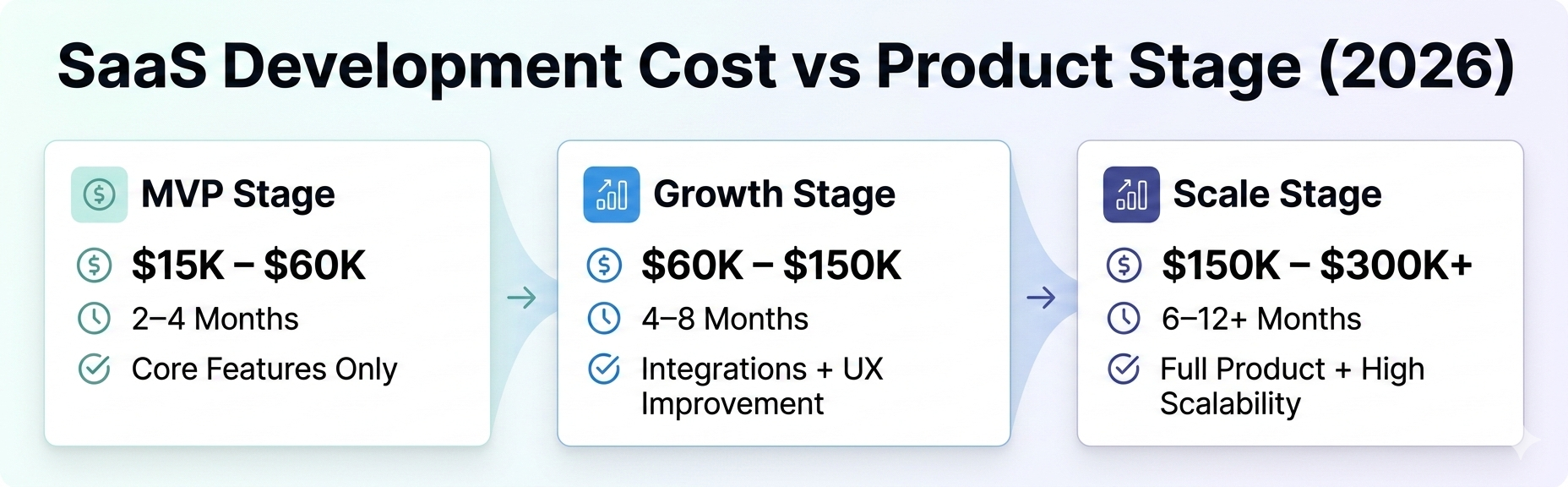
MVP SaaS cost (2026): $15,000 – $60,000
Full SaaS product cost: $80,000 – $300,000+
Timeline: MVP (2–4 months), Full product (6–12+ months)
The final cost depends on product complexity, integrations, scalability requirements, and the experience level of the development team you choose
What is SaaS Platform
A SaaS (Software as a Service) platform is a cloud-based software product that users access through a browser, where they typically pay a recurring subscription instead of purchasing a one-time license, which makes it a scalable and predictable business model for founders who want recurring revenue without managing installations or manual updates.
In simple terms, instead of selling software once, you are building a system that continuously delivers value to users over time, which means your product must handle user management, billing, performance, security, and ongoing updates — all at the same time, without breaking.
Common SaaS examples include:
CRM systems
Accounting platforms
Marketing automation tools
AI-powered applications
From a founder’s perspective, SaaS is not just about building features; it is about building a reliable product ecosystem that can grow with users, handle increasing demand, and still deliver a smooth experience, which is why the cost to build a SaaS platform in 2026 is often higher than expected.
Key Factors Affecting Cost
1. Product Complexity
The level of complexity in your SaaS idea directly determines how much you will spend, because every additional layer of logic, automation, or user interaction requires more development time, testing, and system design.
A simple SaaS with basic login and dashboard is relatively affordable
A mid-level SaaS with workflows and integrations increases cost significantly
A complex SaaS with AI, automation, and real-time data processing can multiply the cost
In most projects we’ve seen, founders initially underestimate how quickly complexity grows once real-world use cases are added, especially when multiple user roles, permissions, and workflows are introduced into the system.
2. Features & Functionality
Every feature you decide to include comes with hidden layers of work, because it is not just about building the feature itself but also about making sure it works smoothly across different user scenarios, edge cases, and devices.
Core features usually include:
User authentication and account management
Dashboard and data display
Subscription billing system
Notifications and alerts
Admin controls
Advanced features may include:
Role-based access control
API integrations
Automation workflows
Data analytics dashboards
A single “simple” feature can easily take days or even weeks once backend logic, frontend interface, and testing are combined.
3. Architecture & Scalability
One of the most important but often overlooked cost factors is how your SaaS is architected from the beginning, because a poorly structured system might work initially but will struggle as users grow, forcing you to rebuild parts of the product later at a much higher cost.
There are generally two approaches:
Build fast and cheap for quick launch
Build scalable and structured for long-term growth
While the first option reduces initial cost, the second option reduces long-term risk, which is why experienced founders try to balance both instead of choosing extremes.
4. Development Team Structure
The cost of building a SaaS platform also depends heavily on who is building it, because different team structures bring different levels of expertise, speed, and reliability.
Freelancers may reduce upfront cost but can lack consistency
Small agencies offer balanced pricing and structured delivery
Large agencies provide high quality but at a premium cost
In-house teams require long-term investment but offer control
A typical SaaS development team includes multiple roles working together, and even if you don’t hire them individually, you are still paying for these functions in some form.
5. Integrations & APIs
Modern SaaS platforms rarely work in isolation, which means you will almost always need to connect your product with external services such as payment gateways, email systems, CRM tools, or third-party APIs, and each integration adds both development complexity and ongoing maintenance responsibility.
For example, integrating a payment system is not just about enabling transactions; it also involves handling failed payments, refunds, subscription logic, and security, which increases both cost and development time.
6. Security & Compliance
If your SaaS platform is targeting markets like the USA, Europe, or Canada, then security and compliance are not optional features but essential requirements, because users expect their data to be protected and regulations like GDPR enforce strict standards.
This includes:
Data encryption
Secure authentication systems
Backup and recovery processes
Compliance with legal standards
Ignoring this early can lead to serious problems later, both technically and legally.
Cost Breakdown by Stages
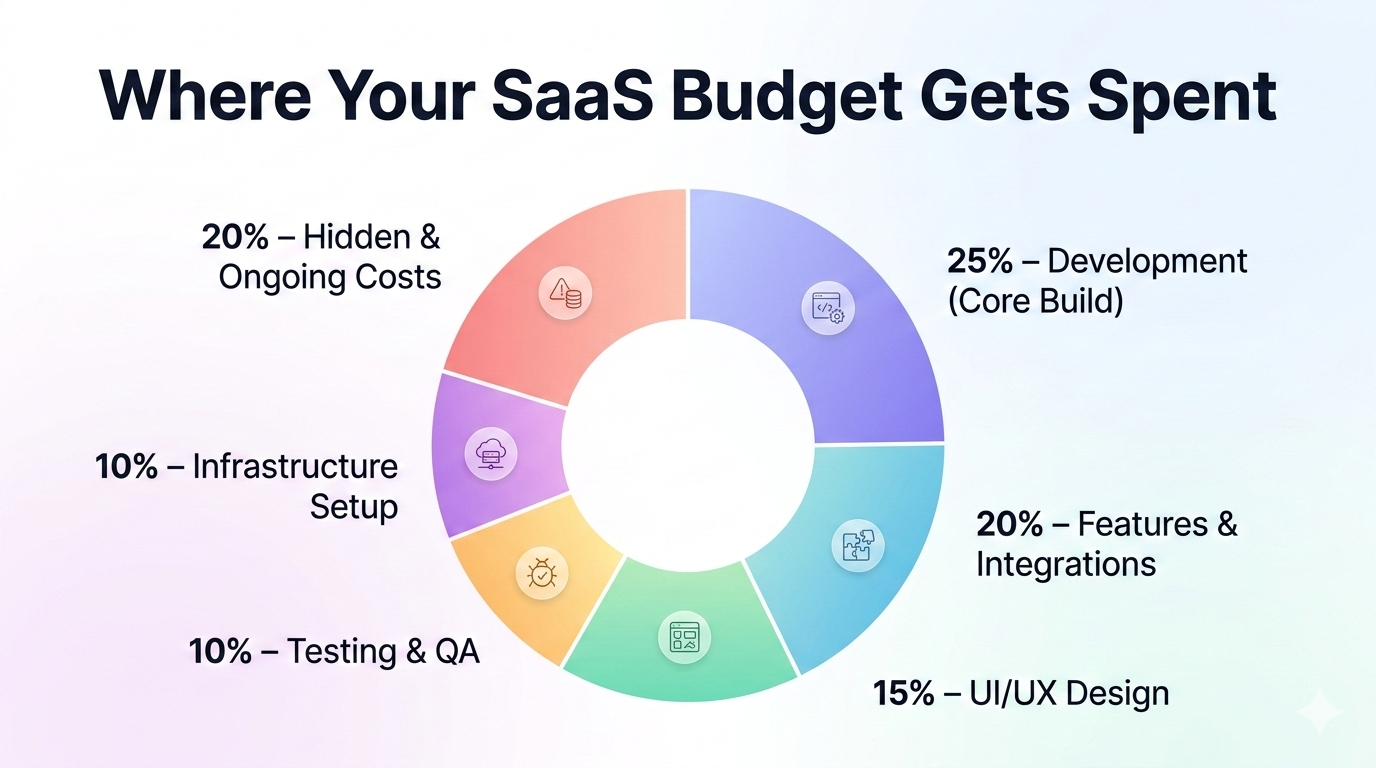
Understanding the SaaS pricing breakdown stage by stage helps founders plan better and avoid unexpected expenses, because each phase of development has its own scope, challenges, and cost implications.
| Stage | Cost Range | What Happens in Detail |
|---|---|---|
| Planning & Validation | $2,000 – $8,000 | Market research, idea validation, feature prioritization |
| UI/UX Design | $3,000 – $15,000 | Wireframes, user flows, prototypes, design testing |
| MVP Development | $10,000 – $50,000 | Core backend + frontend + initial integrations |
| Full Development | $50,000 – $200,000+ | Advanced features, scalability, optimization |
| Testing & QA | $3,000 – $15,000 | Debugging, performance testing, fixing edge cases |
| Launch & Deployment | $1,000 – $5,000 | Server setup, deployment pipelines, go-live |
In most projects we’ve seen, changes during development — such as adding new features or modifying workflows — can increase the total cost by 10–25%, which is why clear planning upfront is critical.
MVP vs Full Cost Comparison
| Factor | MVP SaaS | Full SaaS Product |
|---|---|---|
| Cost | $15K – $60K | $80K – $300K+ |
| Timeline | 2–4 months | 6–12+ months |
| Features | Core functionality only | Complete feature ecosystem |
| Scalability | Limited | High |
| UI/UX | Basic | Advanced and optimized |
| Risk | Lower investment risk | Higher financial commitment |
A common mistake founders make is trying to build a full SaaS product from day one, which increases both risk and cost, whereas starting with an MVP allows you to test your idea in the market, gather feedback, and make improvements based on real user behavior instead of assumptions.
Hidden Costs
While initial development cost gets most of the attention, the real financial impact of a SaaS platform becomes clear only after launch, when ongoing expenses start adding up.
1. Maintenance
Maintenance is continuous and includes fixing bugs, updating systems, and improving features based on user feedback, which typically costs around 15–25% of the initial development cost annually.
2. Hosting & Infrastructure
Your SaaS platform runs on cloud servers, and as your user base grows, so does your infrastructure cost, which can start small but increase significantly over time.
Early stage → $50–$200/month
Growth stage → $500–$2,000/month
Scaling stage → $5,000+/month
3. Third-Party Tools
Most SaaS platforms rely on multiple tools for different functions, and these recurring costs can quickly add up if not planned properly.
Examples include:
Email delivery services
Analytics platforms
Payment processors
Automation tools
4. Scaling & Optimization
As your SaaS grows, performance becomes critical, and you may need to invest in database optimization, faster APIs, and better infrastructure to maintain user experience, which adds to ongoing costs.
5. Customer Support & Operations
A growing SaaS product requires systems to manage users, handle queries, and maintain satisfaction, which means additional investment in support tools and team resources.
Time to Build
MVP Timeline (2–4 Months)
Building an MVP usually involves a structured but fast-paced process where planning, design, and development are aligned to deliver a functional product quickly, without unnecessary features.
Full SaaS Timeline (6–12+ Months)
A full SaaS product takes longer because it involves deeper architecture, more features, and better scalability, which requires careful planning and execution across multiple stages.
In reality, SaaS development is ongoing, and most successful products continue evolving even after launch.
How to Reduce Cost
1. Start with a Focused MVP
Instead of building a full platform, focus on solving one clear problem for a specific user group, which helps reduce both development time and cost.
2. Use Pre-built Solutions
Leveraging existing tools for authentication, payments, and UI components can significantly reduce development effort and speed up time to market.
3. Prioritize Features Carefully
Only build features that directly contribute to user value or revenue, and delay everything else until you have real data.
4. Avoid Rework
Poor planning leads to rebuilding, which increases cost, so investing time in proper planning often saves money later.
5. Validate Before Scaling
Before investing heavily in advanced features, make sure your product has real users and demand, which reduces financial risk.
Real Example / Case Study
Let’s consider a practical SaaS idea to understand how cost builds over time.
SaaS Idea: Appointment Scheduling Platform
Phase 1: MVP
Features:
User authentication
Calendar integration
Booking system
Basic dashboard
Cost: $25,000
Timeline: 3 months
Phase 2: Growth
Once initial users start using the platform, additional features are added to improve functionality and user experience.
Payment integration
Notifications
Admin dashboard
Reports
Cost: $40,000
Timeline: 4 months
Phase 3: Scaling
As the product grows, focus shifts to performance and advanced capabilities.
Multi-user support
Performance optimization
Advanced analytics
Cost: $60,000+
The total cost reaches around $125,000 over 10–12 months, but this phased approach reduces risk and ensures that money is spent based on actual user needs rather than assumptions.
FAQs
1. What is the cost to build a SaaS platform in 2026?
It typically ranges from $15,000 for an MVP to $300,000+ for a full-featured product, depending on complexity and features.
2. How much does a SaaS MVP cost?
Most SaaS MVPs cost between $15,000 and $60,000 and take around 2–4 months to build.
3. Why is SaaS development expensive?
Because it involves backend systems, scalability, integrations, security, and ongoing infrastructure, not just a simple interface.
4. Can I build a SaaS on a low budget?
Yes, by starting with an MVP and using no-code or low-code tools, but scalability and flexibility may be limited.
5. How long does it take to build a SaaS product?
An MVP takes 2–4 months, while a full SaaS product can take 6–12+ months or more depending on scope.
6. What are the ongoing costs after launch?
Maintenance, hosting, third-party tools, and scaling costs, which can range from $200 to $5,000+ per month.
Final Thoughts
The Cost to Build a SaaS Platform in 2026 is not a fixed number but a result of multiple strategic decisions that you make at different stages of your product journey, and the founders who manage cost effectively are usually the ones who focus on building only what is necessary at each stage instead of trying to build everything at once.
If you are planning a SaaS product and want a clear, realistic estimate based on your idea, features, and target market, it is always better to break it down properly before starting development, because the clarity you gain early can save you both time and money later.